HCl Gas Generator System

  • Home
  • HCl Gas Generator System

HCl Gas Generator System

Anhydrous & Dry Hydrogen Chloride Gas Generation Solutions

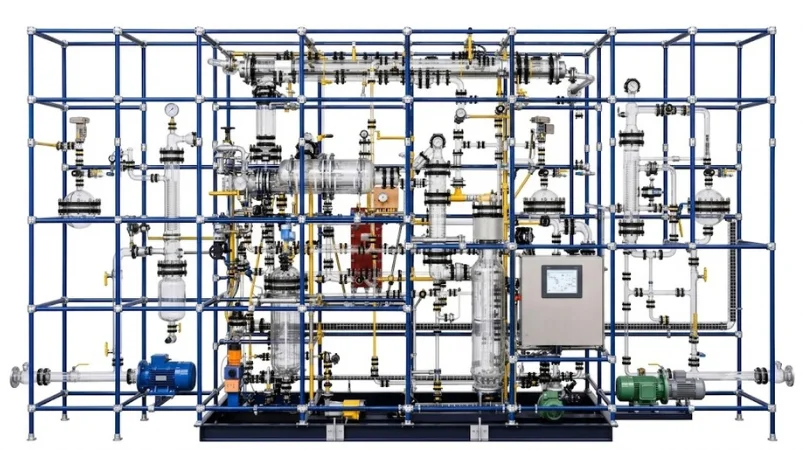
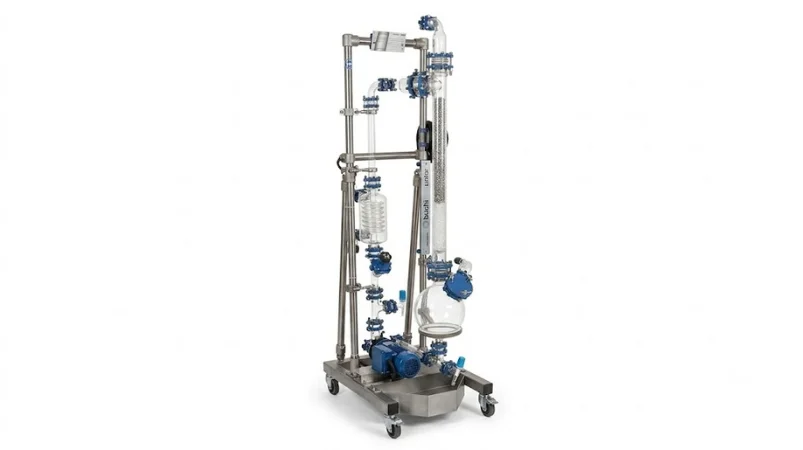
The HCl Gas Generator System is a complete glass-based process plant designed to generate high-purity, anhydrous hydrogen chloride (HCl) gas from commercial hydrochloric acid. These systems are widely used in pharmaceutical, chemical, agrochemical, and specialty process industries where moisture-free HCl gas is critical for reaction efficiency and product quality.

Our HCl gas generation plants are engineered, designed, and manufactured as per international process and safety standards, ensuring durability, operational stability, and long service life under continuous industrial operation.

Why HCl Gas Generation is Required

Commercial hydrochloric acid is typically available as a 30% aqueous solution.
However, many reactions — especially in APIs, bulk drugs, and fine chemicals — require dry or anhydrous HCl gas, as even small amounts of moisture can:

  • Affect reaction yield
  • Cause side reactions
  • Reduce product purity

The HCl Gas Generator System converts aqueous acid into controlled, on-demand HCl gas, eliminating dependency on gas cylinders and improving process safety.

Types of HCl Gas Generator Systems Offered

We design and supply three proven industrial processes, selected based on capacity, operating cost, and effluent philosophy.

 Boiling Route (Azeotropic Distillation Route)

In this method, 30% HCl solution is fed continuously into a glass azeotropic distillation column equipped with a steam-heated thermo-syphon reboiler.

  • HCl gas is liberated from the boiling solution
  • Vapors are stripped in the column
  • 20% HCl is obtained as the bottom product
  • Bottom acid is cooled, stored, and sent for disposal or reuse

Key Features:

  • Low capital investment
  • Simple and compact design
  • Continuous operation
  • No sulphuric acid handling
  • Produces pure 20% HCl as bottom liquid

Best suited for moderate capacities and simpler installations.

Sulphuric Acid Route

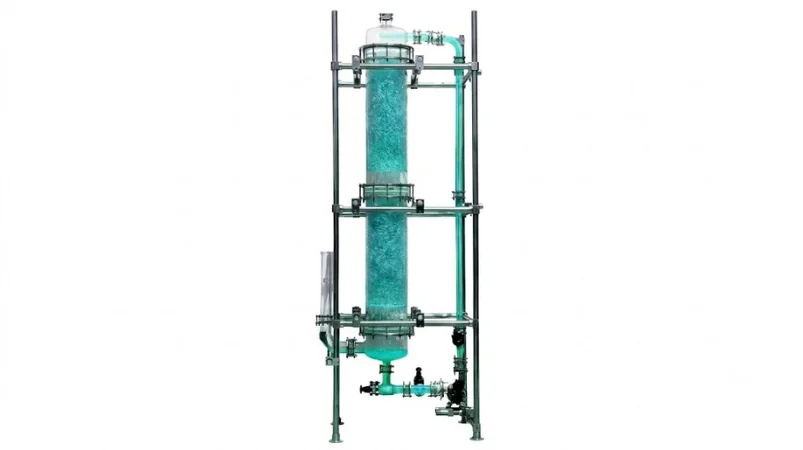
This process generates dry HCl gas by dehydrating 30% HCl solution using concentrated sulphuric acid in a packed column.

  1. Sulphuric acid and HCl solution contact inside the column
  2. Water is absorbed by sulphuric acid
  3. Dry HCl gas is released and collected
  4. Bottom product is spent sulphuric acid containing traces of HCl

Key Features:

  • Compact plant layout
  • No external gas drying required
  • High gas liberation efficiency
  • Handles continuous operation

Considerations:

  • High sulphuric acid consumption
  • Higher operating cost
  • Acidic effluent requiring treatment

Calcium Chloride Route (Zero Liquid Discharge Route)

This is the most environmentally friendly HCl gas generation process.

  • Calcium chloride breaks the HCl–water azeotrope
  • Entire HCl is liberated as gas
  • Bottom CaCl? solution is reconcentrated and recycled
  • No liquid effluent discharge

Key Features:

  • Zero discharge process
  • Lowest operating cost in long term
  • High system efficiency
  • Continuous gas generation
  • Environmentally compliant design

Ideal for large-scale and sustainable operations.

General System Configuration

  • Glass generation column
  • Reboiler / reaction zone
  • Condensers & mist eliminators
  • Drying & purification section
  • Gas flow control & instrumentation
  • Safety venting and pressure control

All wetted parts are manufactured from Borosilicate Glass 3.3, with PTFE seals and corrosion-resistant supports.

Technical Specifications

Parameter

Range

Gas Capacity

5 kg/hr to 200 kg/hr

Operating Mode

Continuous

Operating Pressure

Near atmospheric

Gas Purity

>99% HCl

Feed

30% HCl solution

Utilities

Steam, cooling water, chilled brine

Construction

Borosilicate Glass 3.3

Control

Manual / Semi-automatic / PLC

Key Benefits

  • On-demand anhydrous HCl gas generation
  • Eliminates cylinder handling risks
  • High purity and consistent gas output
  • Scalable from pilot to industrial scale
  • Long equipment life due to glass construction
  • Custom-engineered for process integration
  • Environmentally responsible options available

Applications

  • API & bulk drug manufacturing
  • Agrochemical synthesis
  • Specialty & fine chemicals
  • Chlorination reactions
  • Research & pilot plants
  • Semiconductor & electronic chemicals

Frequently Asked Questions (FAQs)

Q1. Which HCl gas generation route is best?
It depends on capacity, operating cost, and effluent policy. Calcium chloride route is best for zero discharge, while boiling route suits smaller systems.

Q2. Is the HCl gas completely dry?
Yes. Systems are designed to deliver nearly anhydrous HCl gas suitable for moisture-sensitive reactions.

Q3. Can the system be customized?
Yes. Capacity, automation level, utilities, and layout can be custom-designed.

Q4. Is continuous operation possible?
Yes. All three processes support continuous, stable operation.

Q5. What safety features are included?
Gas containment, pressure control, mist eliminators, vent scrubbing compatibility, and corrosion-resistant materials.

Note: The HCl Gas Generator System can be supplied as a standalone unit or as part of a complete turnkey HCl recovery, absorption, and purification plant.

Related Products

HCl Purification System

View Details

HCl Gas Generator System

View Details

HCl Adiabatic Absorption System

View Details

HCL Gas Absorber

View Details