HCl Adiabatic Absorption System

  • Home
  • HCl Adiabatic Absorption System

HCl Adiabatic Absorption System

Efficient Conversion of HCl Gas into Hydrochloric Acid

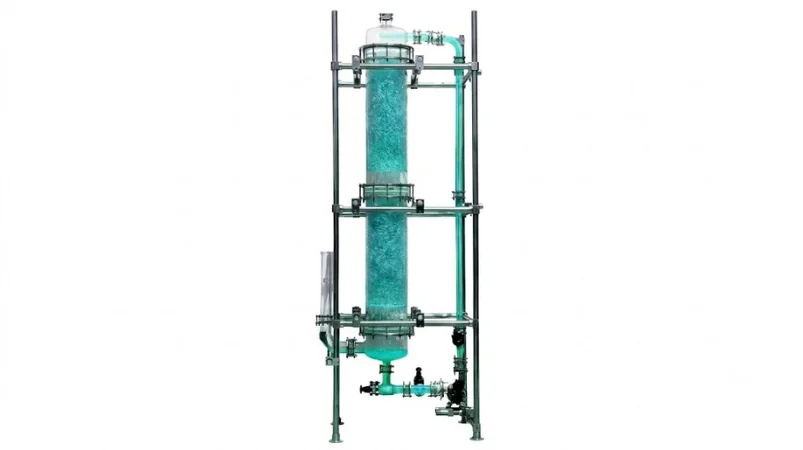
The HCl Adiabatic Absorption System is a specialized process unit designed to economically absorb hydrogen chloride (HCl) gas into water, producing hydrochloric acid solutions of 30–31% concentration under normal operating conditions.

This system is widely adopted where HCl gas is generated as a by-product and direct venting is prohibited due to environmental and safety regulations.

Unlike isothermal systems, adiabatic absorption operates without external heat input, relying on controlled heat generation within the absorption column for efficient mass transfer.

Process Working Principle

  • HCl gas enters the absorption column from the bottom
  • Fresh water is sprayed from the top of the column
  • Gas and liquid flow counter-currently through multiple packed sections
  • The absorption reaction is exothermic
  • Heat generated causes approximately 30% of water to vaporize
  • Water vapor and non-condensables rise to the column head
  • A top condenser recovers vapors and returns condensate
  • A bottom cooler dissipates heat before acid storage
  • Hydrochloric acid is collected at the bottom at 45–50°C

For stable operation, gas loading should not fall below 50% of design capacity.

Key System Characteristics

  • Adiabatic operation (no external heating)
  • High absorption efficiency
  • Continuous operation capability
  • Minimal utility consumption
  • Excellent environmental compliance
  • Robust performance with mixed gas streams (air, moisture, non-condensables)

Salient Features

  • Production of 30–31% hydrochloric acid
  • Packed column design for high gas–liquid contact
  • Efficient heat removal using condenser and cooler
  • Handles air, water vapor, and non-condensable gases
  • Corrosion-resistant construction
  • Low operating and maintenance cost
  • Safe containment of hazardous HCl gas
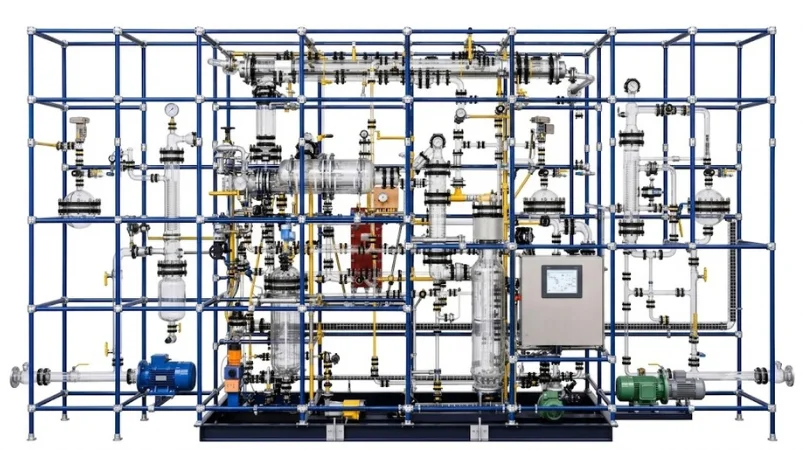
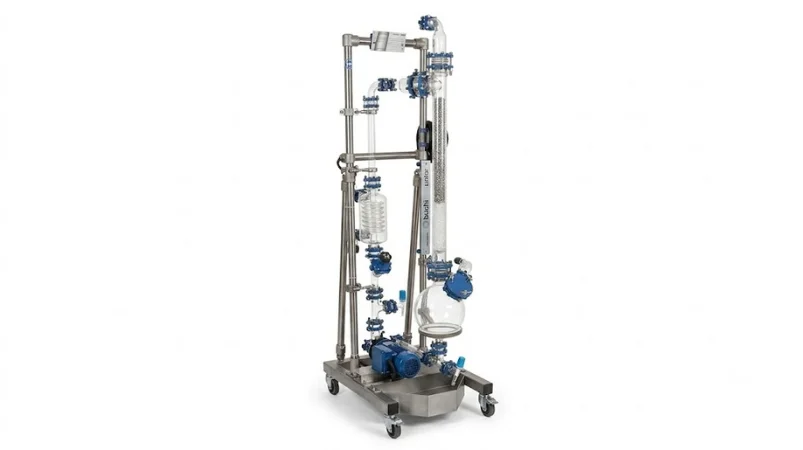
  • Suitable for pilot and industrial scale

Construction & Materials

  • Borosilicate Glass 3.3 (wetted parts)
  • PTFE seals and gaskets
  • High-efficiency structured or random packing
  • Corrosion-resistant support structure
  • Glass condenser and acid cooler
  • Flanged connections for easy maintenance

Technical Specifications

Unit Model

Packed Column Size

Condenser HTA (m²)

HCl Gas Capacity

HCL3

80 mm × 3 m

0.35 × 2

10 kg/hr

HCL4

100 mm × 4 m

0.5 × 2

20 kg/hr

HCL6

150 mm × 4 m

1.5 × 2

60 kg/hr

HCL9

225 mm × 4.5 m

2.5 × 2

150 kg/hr

HCL12

300 mm × 4.5 m

4.0 × 2

300 kg/hr

Operating Parameters

  • Operating Mode: Adiabatic absorption
  • Gas Flow: Counter-current
  • Operating Pressure: Near atmospheric
  • Acid Outlet Temperature: 45–50°C
  • Minimum Gas Loading: ≥ 50% of design
  • Cooling: External condenser & acid cooler

Applications

  • Recovery of HCl from by-product gas streams
  • Chemical & pharmaceutical manufacturing
  • Chlorination processes
  • Acid regeneration systems
  • Environmental emission control
  • Gas scrubbing installations
  • Pilot plant acid absorption

Key Benefits

  1. Converts hazardous HCl gas into usable acid
  2. Eliminates atmospheric emissions
  3. Lower energy consumption than cooled absorbers
  4. Reliable continuous operation
  5. Long service life due to glass construction
  6. Compact footprint with high efficiency
  7. Easy integration with upstream gas generators

Why Adiabatic Absorption?

Adiabatic absorption is preferred when:

  • Moderate acid concentration is sufficient
  • Energy efficiency is critical
  • Cooling utilities are limited
  • Continuous gas streams are available
  • Simple, robust operation is required

Frequently Asked Questions (FAQs)

Q1. Why is gas loading critical in adiabatic absorption?
Low gas flow reduces heat generation, leading to poor absorption efficiency. Minimum 50% design load ensures stable operation.

Q2. Can this system handle moist or impure HCl gas?
Yes. The system effectively absorbs HCl mixed with air, moisture, and non-condensables.

Q3. Is external heating required?
No. The process is fully adiabatic and self-sustaining.

Q4. What acid concentration is achievable?
Typically 30–31% HCl, depending on operating conditions.

Q5. Is this system environmentally compliant?
Yes. It prevents direct venting of HCl gas and meets emission control requirements.

Note: This system can be supplied as a standalone absorption unit or integrated into a complete HCL Gas Generation & Recovery Plant.


Related Products

HCL Gas Absorber

View Details

HCl Purification System

View Details

HCl Adiabatic Absorption System

View Details

HCl Gas Generator System

View Details